

Social Media Marketing (SMM): A Complete Guide to Grow Your Brand Online
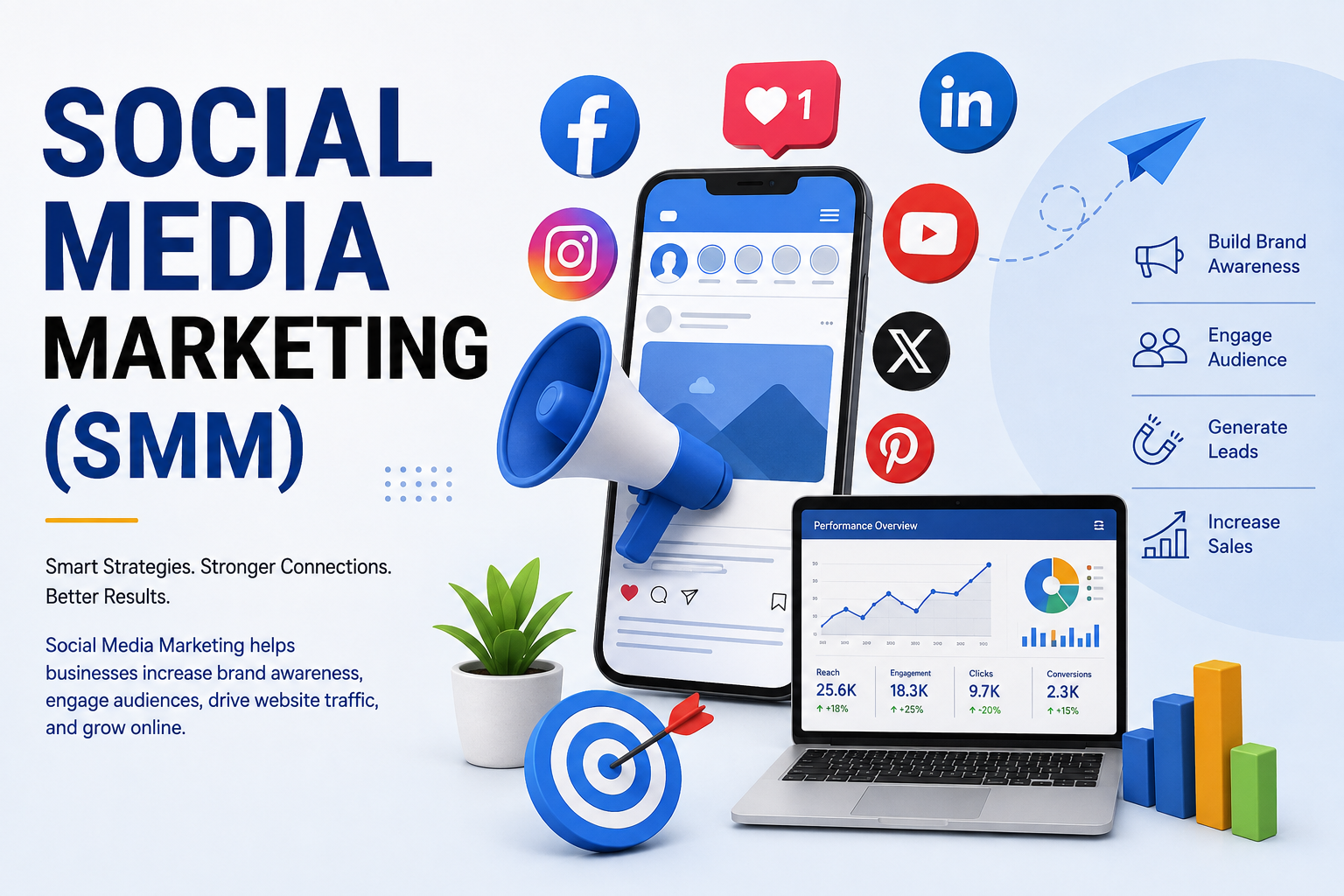
In today’s digital world, having an online presence is essential for businesses of every size. Social Media Marketing (SMM) has become one of the most effective ways to connect with customers, build brand awareness, promote products and services, and generate business opportunities.
Platforms such as Facebook, Instagram, YouTube, LinkedIn, Pinterest, and X allow businesses to communicate directly with their target audience. With the right social media marketing strategy, businesses can reach potential customers, increase engagement, drive website traffic, and build long-term brand trust.
Whether you are a small business, startup, local company, or established brand, a well-planned SMM strategy can help you achieve measurable digital marketing results.
What Is Social Media Marketing (SMM)?
Social Media Marketing (SMM) is the process of promoting a business, brand, product, or service through social media platforms. It involves creating and sharing valuable content such as:
Social media posts
Images and graphics
Short-form videos
Reels and Stories
Educational content
Promotional campaigns
Customer-focused content
Videos and live sessions
The main goal of social media marketing is to attract the right audience, encourage engagement, increase brand visibility, and convert followers into customers.
Why Is Social Media Marketing Important for Businesses?
Social media has changed the way businesses communicate with customers. Instead of depending only on traditional advertising, companies can now interact with their audiences directly.
1. Builds Brand Awareness
Consistent social media activity helps people recognize and remember your brand. Regularly publishing useful and relevant content can increase your visibility among potential customers.
2. Reaches Your Target Audience
Social media platforms provide powerful targeting options. Businesses can create content and advertising campaigns based on factors such as interests, location, demographics, and online behavior.
3. Increases Website Traffic
Social media can be an effective source of website traffic. Sharing blogs, product pages, landing pages, and useful resources can encourage users to visit your website.
4. Generates Leads and Sales
A strong social media marketing strategy can attract potential customers and guide them toward taking action, such as making an enquiry, signing up, requesting a quotation, or purchasing a product.
5. Improves Customer Engagement Social media provides businesses with an opportunity to communicate directly with customers through comments, messages, reactions, and other interactions.
Major Social Media Platforms for Marketing
Different social media platforms attract different types of audiences. Businesses should choose platforms based on their target customers and marketing objectives.
Facebook Marketing
Facebook is useful for building communities, sharing business updates, publishing videos and images, running advertisements, and connecting with customers.
Instagram Marketing
Instagram is highly visual and works well for brands that can showcase products, services, events, people, and creative content through posts, Reels, Stories, and other formats.
YouTube Marketing
YouTube is an important platform for video marketing. Businesses can publish tutorials, product demonstrations, educational videos, customer stories, and promotional videos.
LinkedIn Marketing
LinkedIn is particularly valuable for B2B marketing, professional networking, company branding, recruitment, industry insights, and business communication.
Pinterest Marketing
Pinterest can help businesses generate website traffic through visually appealing content, product inspiration, guides, and searchable visual content.
X Marketing
X can be useful for real-time communication, industry discussions, announcements, news, customer engagement, and brand visibility.
Key Elements of a Successful SMM Strategy
A successful social media marketing strategy requires more than simply posting content. Businesses need a clear plan.
1. Define Your Marketing Goals
Start by identifying what you want to achieve.
Common goals include:
Increasing brand awareness
Generating leads
Increasing sales
Driving website traffic
Improving customer engagement
Building an online community
Promoting products or services
2. Identify Your Target Audience
Understanding your audience is essential. Research their interests, problems, needs, preferences, and online behavior.
Creating customer-focused content makes your social media campaigns more relevant and effective.
3. Create a Social Media Content Strategy
A good social media content strategy should include different types of content rather than only promotional posts.
Consider using:
Educational posts
Informational blogs
Product content
Behind-the-scenes content
Customer testimonials
FAQs
Videos
Infographics
Industry updates
Promotional offers
4. Maintain Consistent Branding
Use consistent brand elements such as your logo, tone of voice, visual style, colors, and messaging across different platforms.
5. Use Visual Content
High-quality images, videos, graphics, Reels, and infographics can make your content more attractive and engaging.
Visual storytelling can also help businesses explain products and services more effectively.
6. Engage With Your Audience
Social media marketing is not just about publishing content. Respond to comments and messages, answer questions, and participate in relevant conversations.
Building relationships with your audience can strengthen customer trust.
Social Media Advertising
Organic content is valuable, but businesses can also use social media advertising to reach a more specific audience.
Paid social media campaigns can help businesses promote:
Products
Services
Events
Offers
Website pages
Lead-generation forms
New launches
A successful advertising campaign should have a clear objective, relevant audience, compelling creative content, and an effective call to action.
How SMM Supports SEO
Social media marketing and Search Engine Optimization (SEO) are different digital marketing strategies, but they can support each other.
Social media can help increase content visibility, attract website visitors, build brand awareness, and encourage people to discover and share your content.
For example, a business can publish an SEO-friendly blog on its website and promote that blog through Facebook, Instagram, LinkedIn, Pinterest, and other platforms.
Social Media Marketing Best Practices
Follow these social media marketing tips to improve your online presence:
Create Valuable Content
Focus on helping, educating, entertaining, or informing your audience instead of making every post promotional.
Use Relevant Keywords
Include relevant keywords naturally in captions, descriptions, titles, and profile information where appropriate.
Use Strong Calls to Action
Encourage users to take the next step with CTAs such as:
Learn More
Visit Our Website
Contact Us
Explore Our Services
Get a Quote
Book a Consultation
Monitor Performance
Track important metrics such as:
Reach
Impressions
Engagement
Clicks
Website traffic
Leads
Conversions
Follower growth
Analyzing these metrics helps businesses understand what content performs well and where improvements are needed.
Common Social Media Marketing Mistakes Avoid these common mistakes:
Posting Without a Strategy
Random posting without clear goals can make it difficult to achieve measurable results.
Focusing Only on Sales
Audiences may lose interest if every post is promotional. Balance promotional content with educational and engaging content.
Ignoring Comments and Messages
Not responding to customers can reduce trust and engagement.
Using Irrelevant Hashtags
Use hashtags that are genuinely relevant to your business, content, and target audience.
Not Measuring Results
Without analytics, it is difficult to determine whether your SMM efforts are producing meaningful results.
How to Measure Social Media Marketing Success
The right metrics depend on your business goals.
For brand awareness, monitor reach, impressions, video views, and follower growth.
For engagement, monitor likes, comments, shares, saves, and interactions.
For traffic, monitor link clicks and website visits.
For lead generation, monitor enquiries, registrations, calls, and form submissions.
For sales, monitor conversions, revenue, and return on advertising spend (ROAS).
Future of Social Media Marketing
Social media marketing continues to evolve as platforms, technologies, and consumer behavior change.
Short-form video, creator marketing, personalized content, social commerce, artificial intelligence, and data-driven advertising are becoming increasingly important areas of digital marketing.
Businesses that continuously test new content formats, understand their audiences, and adapt their strategies can stay competitive in the changing digital landscape.
Social Media Marketing (SMM) is an important part of modern digital marketing. It allows businesses to build brand awareness, connect with customers, promote products and services, generate leads, and increase online visibility.
The key to successful SMM is not simply posting frequently. Businesses need a clear strategy, valuable content, consistent branding, audience engagement, targeted advertising, and regular performance analysis.
With the right social media marketing strategy, businesses can turn social platforms into powerful channels for building relationships and achieving sustainable online growth.


Post a Review