

Social Media Marketing: The Complete Guide to Grow Your Brand Online

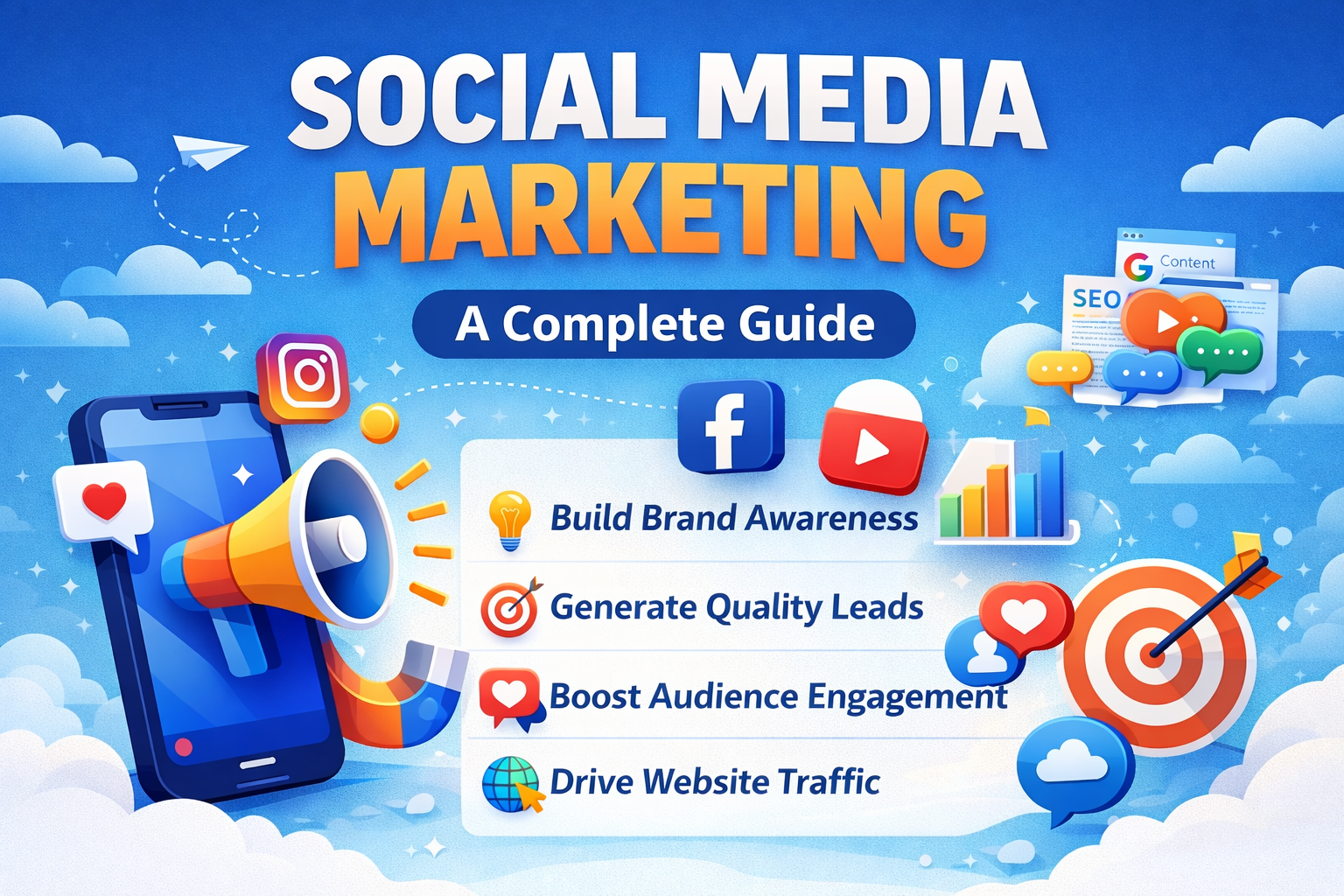
Social media marketingis the process of creating, publishing, and promoting content across platforms like Facebook, Instagram, TikTok, LinkedIn, and YouTube to build brand awareness, engage audiences, and drive conversions. With billions of active users online, social media presents a massive opportunity for every business, but success requires a strategic plan, strong creativity, and consistent execution.
In this guide, we’ll cover everything from developing your social media strategy to using high-impact keywords, analytics, and content that converts.
What Is Social Media Marketing?
Social media marketing (SMM) combines content creation, community engagement, and data-driven strategy to connect with potential and existing customers on digital platforms. It enhances brand visibility, improves customer loyalty, and drives traffic back to your website or e-commerce store.

Key Benefits of Social Media Marketing for Business Growth
Before building a strategy, it’s important to understand why social media marketing plays a crucial role in modern business success. An effective social media presence helps brands connect with customers, stay competitive, and drive measurable results.
1. Strengthens Brand Visibility and Recognition
Social media platforms allow businesses to showcase their brand consistently through posts, reels, stories, and videos. Regular exposure helps your brand stay top-of-mind for your audience. Over time, users begin to recognize your logo, tone, and messaging, which builds familiarity and credibility. This increased visibility makes it easier for customers to trust your brand when they are ready to make a purchase.
2. Drives High-Quality Leads and Conversions
Social media marketing enables precise audience targeting based on interests, behavior, location, and demographics. Platforms like LinkedIn, Facebook, and Instagram help businesses reach users who are actively interested in similar products or services. With the right content and call-to-action, social media becomes a powerful channel for generating qualified leads and converting them into paying customers.
3. Builds Strong Customer Relationships and Loyalty
Engaging with your audience through comments, messages, polls, and interactive content helps create two-way communication. When customers feel heard and valued, they are more likely to stay loyal to your brand. Consistent engagement also builds trust, encourages repeat interactions, and turns followers into long-term brand advocates.
4. Supports SEO and Improves Online Presence
While social media does not directly impact search rankings, it plays a strong supporting role in SEO. Social sharing increases content visibility, drives traffic to your website, and improves brand signals online. Optimized social profiles, keyword-rich posts, and backlinks from shared content contribute to stronger digital authority and improved discoverability in search engines.
From Strategy to Success: How to Create a Powerful Social Media Marketing Plan That Converts
Creating a successful social media marketing strategy requires more than posting regularly. It demands research, clear planning, consistent branding, and performance tracking. Below is a comprehensive framework to help your business generate engagement, leads, and measurable growth.
1. Define and Analyze Your Ideal Customer Persona
Before creating content, you must clearly understand who you are targeting. Identify your ideal customer’s age, gender, location, profession, interests, pain points, and buying behavior.
Use tools like:
Social media insights (Instagram Insights, Facebook Analytics)
Google Analytics
Audience polls and surveys
Social listening tools
When you understand your audience’s challenges and preferences, you can create content that resonates, improves engagement rates, and drives conversions.
2. Establish Clear Marketing Objectives and Performance Metrics
Every strong strategy begins with well-defined goals. Instead of vague objectives like “increase followers,” set structured and trackable targets.
Focus on:
Increasing brand awareness
Generating qualified leads
Driving website traffic
Boosting engagement rate
Improving conversion rate
3. Conduct In-Depth Competitor and Market Analysis
Understanding your competitors gives you a competitive edge. Analyze:
What type of content they post (videos, reels, carousels, blogs)
Their posting frequency
Engagement levels (likes, comments, shares)
Hashtag and keyword usage
Paid advertising strategies
4. Select the Most Effective Social Media Platforms
Not every platform suits every business. Choosing the right channels ensures maximum ROI.
For example:
Instagram & Facebook – Best for brand awareness and visual storytelling
LinkedIn – Ideal for B2B marketing and professional networking
YouTube – Powerful for long-form educational and product videos
TikTok – Effective for short-form viral content and younger audiences
Focus on 2–3 platforms where your target audience is most active, rather than spreading your efforts too thin.
5. Develop a Consistent Brand Identity and Messaging Style
Your brand voice should reflect your company’s values and personality. Whether it’s professional, friendly, inspirational, or authoritative, consistency is key.
Maintain consistency in:
Tone of captions
Visual design and color scheme
Logo placement
Content themes
Messaging style
A strong and recognizable brand identity builds trust and improves brand recall over time.
6. Optimize Social Media Profiles for Visibility and Conversions
Your profile is often the first impression potential customers get. Make it impactful and SEO-friendly.
Ensure you:
Use relevant high-search keywords in bio descriptions
Add a clear call-to-action (Book Now, Contact Us, Learn More)
Include website links or landing pages
Use professional profile and cover images
Highlight services and achievements
Optimized profiles increase discoverability and encourage users to take action.
7. Create a Content Calendar and Posting Schedule
Consistency drives algorithm performance. Plan your content weekly or monthly using a structured content calendar.
Include:
Educational posts
Promotional content
User-generated content
Video marketing (Reels/Shorts)
Trending topics
Posting consistently improves engagement, audience retention, and organic reach.
8. Track Performance and Continuously Improve
Regular monitoring helps you understand what works and what doesn’t. Review analytics weekly or monthly and adjust your strategy accordingly.
Monitor:
Engagement rate
Reach and impressions
Conversion metrics
Audience growth
Best-performing content formats
Data-driven optimization ensures long-term success on social media.
Social Media Marketing: A Game-Changer for Business Growth
In today’s digital world, social media marketing is no longer optional; it is a necessity. With billions of active users across platforms like Facebook, Instagram, LinkedIn, YouTube, and TikTok, businesses have direct access to their target audience. A well-planned social media strategy can increase visibility, generate leads, and drive measurable business growth.
Below are the key reasons why social media marketing is essential for your business:
1. Increases Brand Awareness
Social media platforms allow businesses to reach a large and diverse audience quickly. By consistently posting valuable content, engaging visuals, and informative videos, your brand becomes more recognizable.
When users repeatedly see your content in their feed, it strengthens brand recall and builds familiarity. Over time, this visibility helps position your business as an industry authority.
2. Generates High-Quality Leads
Social media advertising offers advanced targeting options based on interests, demographics, behavior, and location. This allows businesses to reach potential customers who are genuinely interested in their products or services.
Features like lead generation forms, direct messaging, and call-to-action buttons make it easier to convert followers into potential clients.
3. Improves Customer Engagement
Unlike traditional marketing, social media enables two-way communication. Customers can like, comment, share, or message your brand directly.
Responding to queries and interacting with followers builds trust and strengthens relationships. Higher engagement also signals platform algorithms to show your content to more people, increasing organic reach.
4. Boosts Website Traffic
Sharing blog posts, service pages, landing pages, and product links on social media drives targeted traffic to your website.
When users click through to your site, they are more likely to explore your offerings, sign up for newsletters, or make a purchase. This makes social media an effective channel for increasing online conversions.
5. Enhances Search Engine Visibility
While social media is not a direct ranking factor for Google, it supports SEO indirectly. Increased content sharing, backlinks, and brand searches improve your overall online presence.
Optimized profiles with relevant keywords also improve discoverability both on search engines and within social platforms.
6. Cost-Effective Marketing Solution
Compared to traditional advertising methods like TV or print, social media marketing is affordable and scalable. Businesses can start with organic content and gradually invest in paid advertising campaigns.
Even with a small budget, targeted ads can deliver measurable results, making it ideal for startups and small businesses.
7. Provides Valuable Customer Insights
Social media analytics tools provide detailed data about audience behavior, preferences, and engagement patterns.
Businesses can track metrics such as reach, impressions, engagement rate, click-through rate, and conversions. These insights help refine marketing strategies and improve campaign performance over time.
8. Strengthens Customer Loyalty and Trust
Consistent interaction, quality content, and quick responses help build long-term customer relationships. When customers feel heard and valued, they are more likely to remain loyal and recommend your brand to others.
Frequently Asked Questions (FAQs) About Social Media Marketing
1. What is Social Media Marketing (SMM)?
Social Media Marketing (SMM) is a digital marketing strategy that uses platforms like Facebook, Instagram, LinkedIn, YouTube, and TikTok to promote products or services, build brand awareness, engage audiences, and generate leads.
2. Why is social media marketing important for businesses?
Social media marketing helps businesses increase brand visibility, connect with their target audience, generate quality leads, drive website traffic, and improve customer relationships. It is also a cost-effective way to grow an online presence.
3. Which social media platform is best for business marketing?
The best platform depends on your target audience and business type.
Instagram & Facebook – Ideal for brand awareness and visual marketing
LinkedIn – Best for B2B marketing and professional services
YouTube – Great for video marketing and tutorials
TikTok – Effective for short-form, engaging content
4. How long does it take to see results from social media marketing?
Organic social media growth typically takes 3–6 months for noticeable results. Paid advertising campaigns can generate faster outcomes, depending on budget and targeting strategy.
5. What are the key metrics to track in social media marketing?
Important metrics include:
Reach and impressions
Engagement rate (likes, comments, shares)
Click-through rate (CTR)
Conversion rate
Follower growth
Return on investment (ROI)
6. What is the difference between organic and paid social media marketing?
Organic marketing involves free content posting to build engagement and community.
Paid marketing includes running ads to reach a targeted audience and generate faster results.
7. How can social media marketing improve SEO?
While social media is not a direct Google ranking factor, it increases brand exposure, website traffic, and content sharing, which indirectly supports search engine optimization (SEO).
8. What type of content performs best on social media?
Video content (Reels, Shorts), educational posts, behind-the-scenes content, user-generated content, and interactive posts (polls, Q&A) typically generate higher engagement.
Conclusion
Social Media Marketing plays a vital role in the growth of modern businesses. It helps increase brand awareness, generate quality leads, improve customer engagement, and drive website traffic. With the right strategy and consistent content, businesses can build strong relationships with their audience and boost overall sales.
By choosing the right platforms and tracking performance regularly, social media can become a powerful and cost-effective tool for long-term business success.


Post a Review